
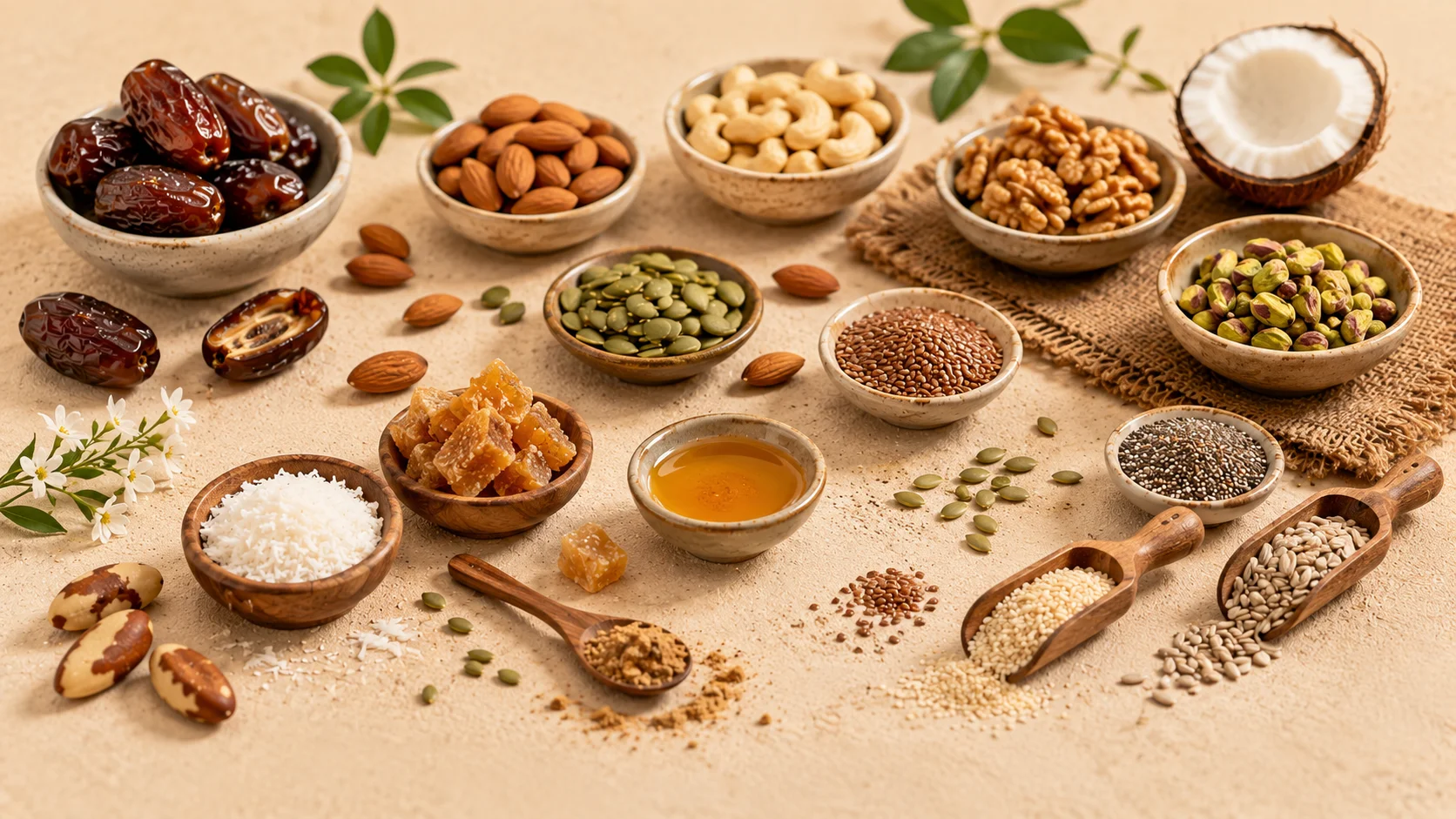
You love a good peda, laddu or kaju katli, but then comes the familiar thought: “Should I really be eating this?” Indian sweets have long been an integral part of festivals, family occasions and moments of celebration. Yet, concerns about refined sugar, excess calories and highly processed ingredients often make people hesitate before taking that second bite.
The good news is that enjoying sweets does not have to mean abandoning mindful eating. The idea behind Guilt free sweets is not to make dessert magically calorie-free. It is about making smarter choices.
- Better ingredients: Look for nuts, seeds, dates, whole grains and other nutrient-rich ingredients.
- Less refined sugar: Naturally sweet ingredients can reduce reliance on large amounts of refined sugar.
- Better portions: A smaller, satisfying sweet can be easier to fit into a balanced diet.
- Realistic indulgence: A sweet should still taste like a sweet. The goal is balance, not deprivation.
So, what exactly makes a sweet “guilt-free”? And how can you tell the difference between a genuinely thoughtful option and clever marketing?
What Does Guilt-Free Actually Mean?
“Guilt-free” is not a strict nutritional category. It is a way of describing a food that may offer a more balanced alternative to a conventional indulgence.
That distinction matters.
A sweet made with dates instead of refined sugar can still contain natural sugars and calories. Similarly, replacing sugar with jaggery does not mean you can eat unlimited quantities. The overall recipe, ingredients, portion size and nutritional profile still matter.
India’s food guidance recommends limiting foods that are high in added sugars and choosing naturally sweet ingredients where appropriate.
Think of Guilt-Free Indian Sweets as a more thoughtful approach to mithai rather than a free pass to eat as much as you like.
What Makes an Indian Sweet a Better Choice?
There is no single ingredient that automatically makes a sweet healthier. Instead, look at the recipe as a whole.
1. The Sweetener Matters
Traditional sweets often rely heavily on refined sugar. Modern recipes may use dates, jaggery or other alternatives. Dates can add natural sweetness along with fibre, while jaggery provides a deeper flavour and some minerals. However, both still contribute to overall sugar and calorie intake. The important question is not simply, “Does it contain sugar?”
Ask:
- How much sweetener is used?
- Is the sweetness coming partly from naturally sweet ingredients?
- Does the recipe contain other nourishing ingredients?
2. Nuts and Seeds Add More Than Crunch
Almonds, cashews, walnuts, pistachios, sesame seeds and other nuts and seeds can make a sweet more nutritionally interesting. They provide nutrients such as protein, fibre and unsaturated fats. They can also make a small serving more satisfying. This is one reason nut-based laddus and bars have become popular among people looking for Guilt-Free Treats without giving up the textures and flavours they enjoy.
3. Portion Size Still Counts
Even the most carefully prepared dessert should be enjoyed mindfully. A small piece of kaju katli after lunch is very different from repeatedly reaching for sweets throughout the day. Instead of asking whether a sweet is “good” or “bad”, think about how it fits into your overall eating pattern.
Traditional Mithai vs A More Thoughtful Alternative
Here is a simple way to compare what you might look for when choosing a sweet.
| What to consider | Conventional sweet | More mindful alternative |
| Sweetness | Often heavily dependent on refined sugar | May use dates, jaggery or naturally sweet ingredients |
| Ingredients | Can be centred around sugar, refined flour and fats | May include nuts, seeds, oats or millets |
| Fibre | Often limited | Can be higher depending on ingredients |
| Protein | Usually modest | May be higher when nuts and seeds are used |
| Portion | Easy to overeat | Smaller, nutrient-dense portions can be more satisfying |
| Main focus | Indulgence | Taste plus ingredient quality |
This does not mean every traditional sweet is unhealthy or every “healthy” sweet is better. The recipe and quantity make the difference.
Why Dates, Nuts and Whole Ingredients Are Gaining Attention
Walk through Indian food trends today and you will notice a clear shift. Consumers are becoming more interested in what is actually inside their food.
Recent Indian food coverage has highlighted growing interest in low-sugar, fruit-based and sugar-free dessert options, while modern desserts are increasingly using ingredients such as nuts, whole grains and alternative sweeteners.
This does not mean people have stopped loving jalebi, gulab jamun or ladoos. Quite the opposite.
People want familiar flavours, but they also want choices that fit more comfortably into their everyday routines.
That is where Guilt Free sweets in India are finding their place.
Can You Really Enjoy Sweets Without Feeling Guilty?
Yes, but the answer is less about finding a magical dessert and more about changing the way you think about treats.
Imagine it is Diwali. There are boxes of sweets everywhere. Instead of avoiding everything or eating several pieces without thinking, you choose one or two sweets you genuinely enjoy.
- You eat them slowly.
- You appreciate the flavour.
- And you move on with your day.
That is a much more sustainable approach than labelling food as something you should feel guilty about.
A simple rule to follow
- Check the ingredients: A shorter, recognisable ingredient list can make it easier to understand what you are eating.
- Look beyond the front label: Words such as “natural”, “sugar-free” or “healthy” do not tell the complete nutritional story.
- Keep portions sensible: Better ingredients do not remove the need for moderation.
- Choose satisfaction: A good-quality sweet that actually satisfies you may be more useful than constantly trying to replace dessert with something you do not enjoy.
Are Sugar-Free and Guilt-Free the Same?
Not necessarily.
This is one of the biggest misconceptions surrounding healthier desserts.
“Sugar-free” can refer to a product made without conventional sugar, but it does not automatically mean low-calorie, nutrient-rich or suitable for everyone.
“Guilt-free” is even broader. It generally refers to making a more balanced food choice while still enjoying the experience of eating something sweet.
So, if you are choosing Guilt free desserts, read the ingredient list and nutrition information rather than relying only on the product description.
How to Choose Better Indian Sweets
When buying mithai online or from a shop, take a minute to check what is actually inside.
Look for:
- Nuts and seeds: Almonds, walnuts, pistachios, sesame and other nutrient-rich additions.
- Natural sources of sweetness: Dates and other fruit-based ingredients can add sweetness and texture.
- Whole-food ingredients: Oats, ragi, makhana and millets can add variety and nutrients.
- Clear information: A trustworthy product should make its ingredients and relevant nutritional information easy to understand.
- No unnecessary extras: Check whether palm oil, vegetable oil or other ingredients are being used when they are not needed.
The best choice is not necessarily the one with the biggest “healthy” claim on the box. It is the one where you understand what you are buying.
The Real Meaning of Guilt-Free
At its heart, guilt-free eating is about removing unnecessary anxiety from food.
Indian sweets are part of our culture. They appear at birthdays, weddings, festivals, family visits and simple moments when someone says, “Have one more.”
There is no need to turn every sweet into a nutritional debate. Instead, choose thoughtfully, enjoy your portion and pay attention to the ingredients.
That is what makes Guilt-Free Indian Sweets a useful idea. Not because they are completely free from sugar, calories or indulgence, but because they can bring together traditional taste with more considered ingredients.
Ready to Enjoy Sweets More Mindfully?
You do not have to give up the Indian sweets you love to make better food choices. Start by choosing sweets made with thoughtful ingredients, keep portions sensible and enjoy every bite without unnecessary guilt.
Explore the range at Healthy Belly today and choose a smarter way to enjoy traditional Indian sweetness while keeping taste and mindful eating on the same plate.
Frequently Asked Questions
1. Are guilt-free sweets actually healthy?
They can be a more balanced choice, depending on their ingredients and portion size. The term does not guarantee a specific nutritional profile.
- Guilt-Free Treats may include nuts, seeds, dates or whole grains.
- Always check the complete ingredient list rather than relying on marketing claims.
2. Which Indian sweet is best for a healthier diet?
There is no single best sweet for everyone. A nut-based or fruit-based option may provide more nutrients than a sweet made mainly from refined sugar.
- Guilt free sweets can be easier to fit into a balanced diet when portions are sensible.
- Consider the full recipe, including sweeteners, fats and serving size.
3. Are sweets made with jaggery better than sugar?
Jaggery is less refined than table sugar and contains small amounts of minerals, but it is still a source of sugar and calories.
- Guilt free desserts made with jaggery should still be enjoyed in moderation.
- The amount used in the recipe matters as much as the type of sweetener.
4. Are date-based sweets good for you?
Dates provide natural sweetness and fibre, making them useful in many dessert recipes. However, they are still naturally high in sugar.
- Guilt Free sweets in india often use dates to create sweetness while also adding texture.
- Pairing dates with nuts and seeds can make a recipe more nutritionally varied.
5. Can I eat guilt-free sweets every day?
It depends on the recipe, your portion size and the rest of your diet. A small, thoughtfully made sweet can fit into many balanced eating patterns.
- Guilt-Free Treats should complement your diet, not replace nutritious meals.
- If you eat sweets regularly, keep portions modest and vary your food choices.
6. What should I check before buying healthy Indian sweets?
Start with the ingredient list and then consider the nutrition information, serving size and claims made on the packaging.
- Guilt-Free Indian Sweets should ideally have ingredients you recognise and understand.
- Look for products that clearly communicate what they contain rather than relying on vague health promises.